
How to Build a Viral Live Shopping Room in China's Interest Commerce?

Chinese interest-based e-commerce platforms (such as Douyin and Kuaishou) have adapted to the era of rising consumer autonomy, providing brands with a more efficient, engaging, and sustainable growth path by focusing on interest-based consumer groups. In the past, live streaming was seen as a channel for completing transactions; now, its value is more complex, becoming a brand narrative space that integrates multiple functions such as improving transaction efficiency, content presentation, user interaction, brand building, and emotional connection.
Brandoro has systematically summarized and compiled a methodology for creating "popular live streaming rooms" that can be replicated by all merchants, providing them with concrete ways to break through operational challenges.
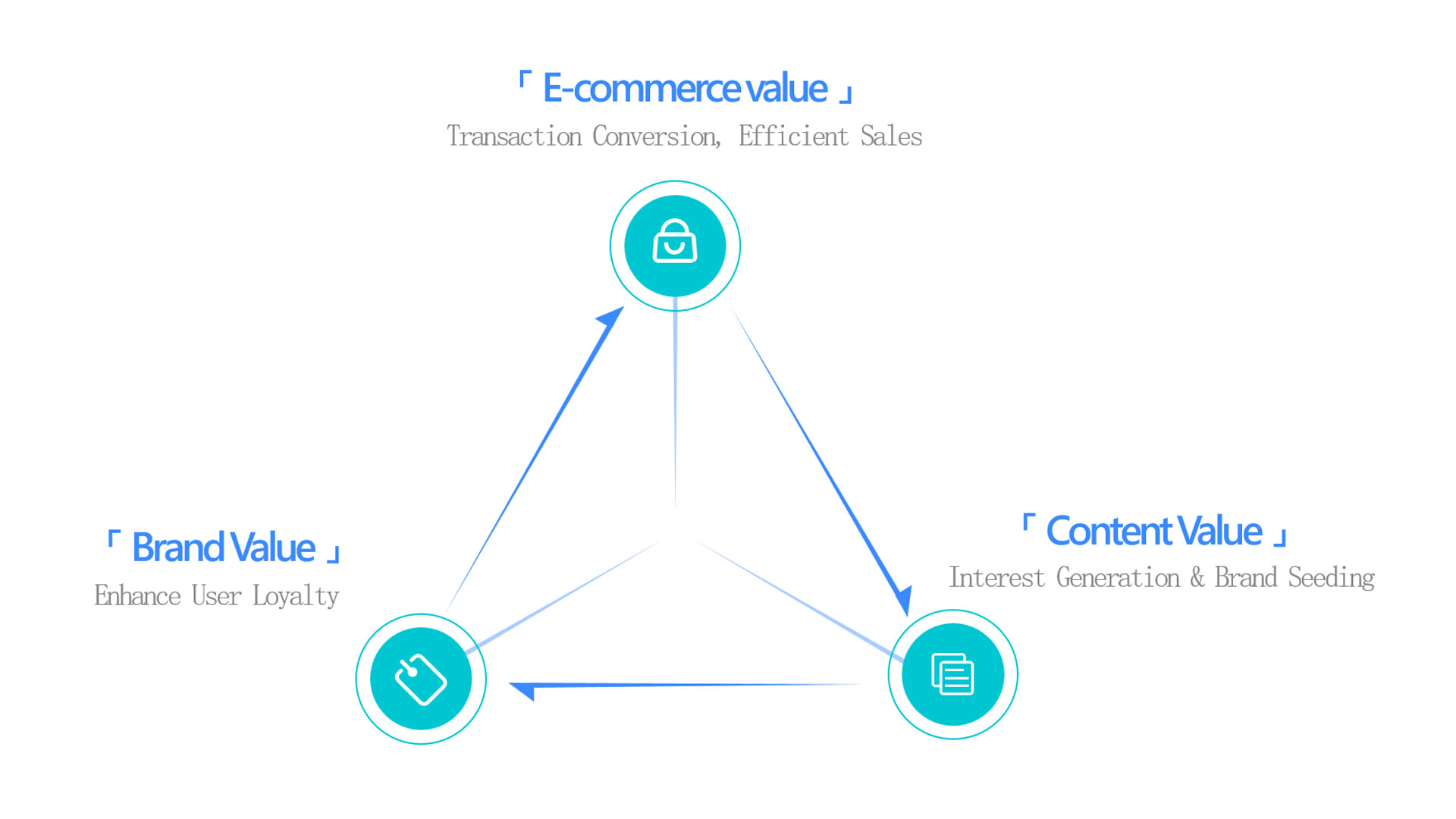
The Three Key Elements of a Live Streaming Room
1. E-commerce Value: Content Boosts Efficiency
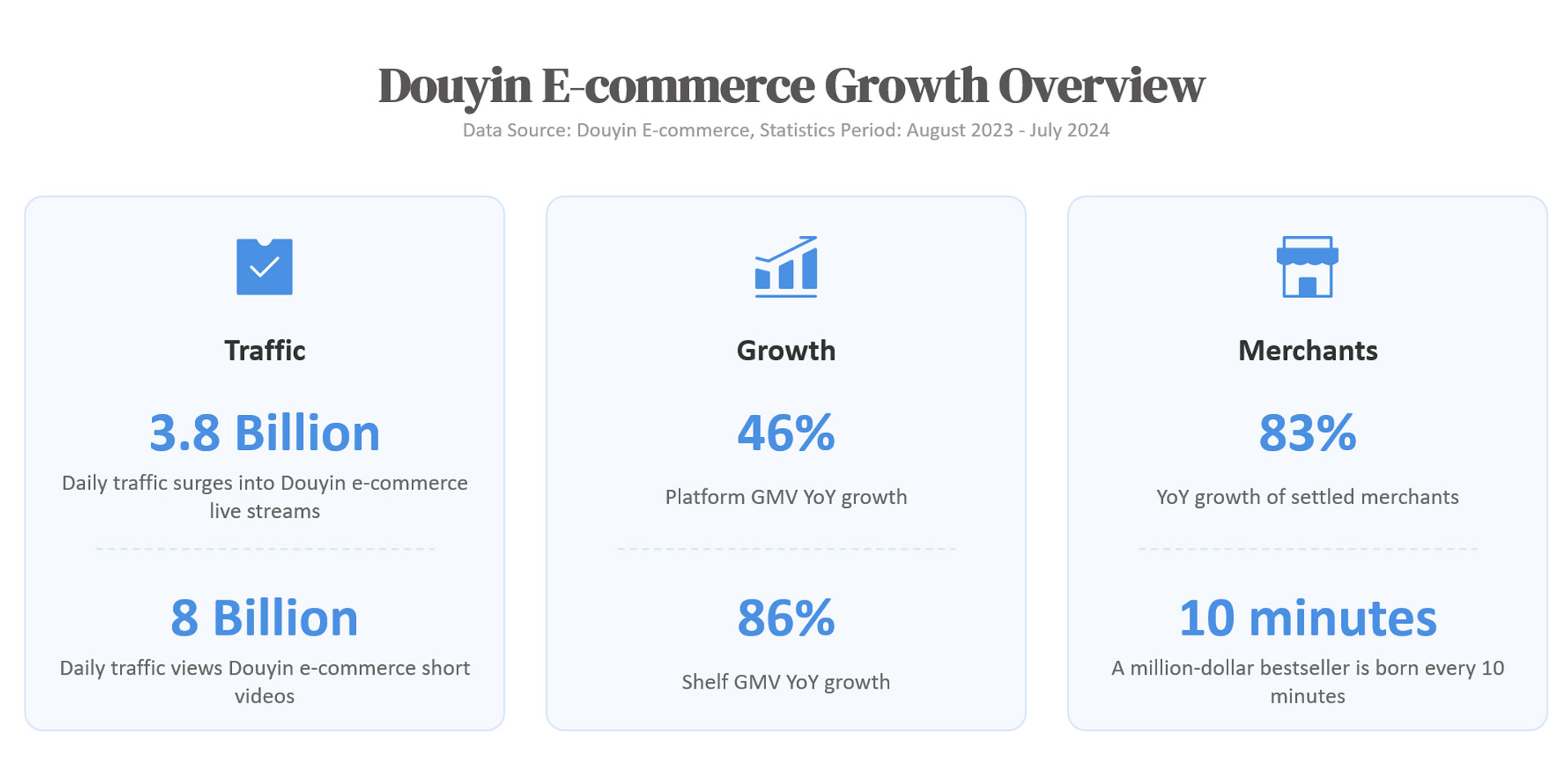
Live streaming remains the core setting for transactions. Every day, 3.8 billion visits flow into Douyin's e-commerce live streaming rooms, and the platform's GMV maintains high double-digit growth, attracting more and more new merchants to join and share business opportunities.
Brand livestreaming is no longer just about driving sales and prices; it has evolved into a crucial platform for improving overall business efficiency through diverse content. Data shows that in-store livestreaming is gradually becoming mainstream, allowing brands to directly connect with consumers, with the number of merchants launching in-store livestreaming increasing by 113% year-on-year.
2. Content Value: Linking Brand Narrative with Consumer Emotion
The high interactivity of live streaming creates a strong sense of immersion and presence for users, which provides brands with a huge range of options for choosing how to develop their narratives.
Brands can provide a sense of companionship to users through real-time interaction and authentic presentation, and can also refresh consumers' sensory experience through the combination of sound, light, and electricity, achieving efficient information delivery. These live-streaming rooms with distinctive content themes and presentation styles are more appealing to viewers, more likely to encourage purchases, and more easily inspired to buy.
In May 2025, SK-II collaborated with the venue of its brand ambassador's offline concert to create a limited-time 520 live stream room and a confession check-in wall, allowing fans who could not attend to immerse themselves in the concert atmosphere and ignite their enthusiasm through online and offline synergy.
3. Brand Value: Penetrating Minds and Building Trust
Live streaming also plays an important role in penetrating brand awareness and building trust, allowing brand image and value proposition to be more deeply embedded in consumers' minds and enhancing their trust.
Outdoor OOTD live streams, through scenario-based styling and style displays, concretize brand concepts and lifestyles, allowing consumers not only to understand the products but also to clearly feel the aesthetics and attitudes represented by the brand.
Real-time, authentic, and trustworthy, live streaming has become the preferred platform for brands to enhance trust. By creating genuine and tangible experiences, brands can quickly build trust, shape their image, and convey their values in the minds of consumers.
Seize New Opportunities Amidst Change : Comprehensive Synergy of Traffic , Content , and Operations.
As a comprehensive platform integrating live streaming, e-commerce, and diverse content formats, Douyin is a platform that combines short-term conversion and long-term brand building, and is also an indispensable key platform in the brand's omni-channel marketing ecosystem.
Live streaming rooms on Douyin have become a frontier for exploring new content-driven live streaming formats. This is not only due to the influence of the content, but also to the complex factors of changes in the platform's traffic ecosystem and the synergy of business operations, and more importantly, to the new opportunities for growth.
In 2025, Douyin e-commerce adjusted its live streaming traffic mechanism. In addition to the traditional "price, shelf space, and traffic acquisition" drivers, "content" was added to the operation logic of e-commerce live streaming rooms.
After the update, a separate e-commerce queue was added to the content pool, expanding the overall traffic scale and allowing good content to get more traffic. At the same time, the e-commerce pool and the closed-loop advertising pool were integrated, allowing for unified management and further improving efficiency.
The integration of e-commerce and the closed-loop advertising pool has changed the past fragmented operation where "the e-commerce pool only cared about GPM, and the advertising pool only focused on ECPM." Advertising not only doesn't squeeze out organic traffic, but it can also drive over 30% growth in organic traffic. By integrating e-commerce and advertising strategies, the system learns from both sets of tags, resulting in more precise targeting. Under this new mechanism, "content" has become the longest-lasting lever for driving traffic growth in live streaming rooms.
On Douyin, businesses rely on content as a foundation and advertising as a lever to increase reach, with both engines working together to achieve business growth.
This has led more and more brands to continuously strengthen their advertising operations: on the one hand, content operations are increasing, and the forms of content narratives and operational goals are becoming more diversified; on the other hand, with the increased investment in content operations, advertising traffic can amplify the advantages of the content and feed back into content iteration.
Merchants at Different Stages of Development Will Have Different Perceptions of the Value Proposition of Live Streaming.
Different brands face five major growth challenges at different stages of their life cycle and in different market environments: category limitations, business growth, brand failure, audience defocus, and traffic traps. Merchants at different stages of development will have different value propositions for live streaming.
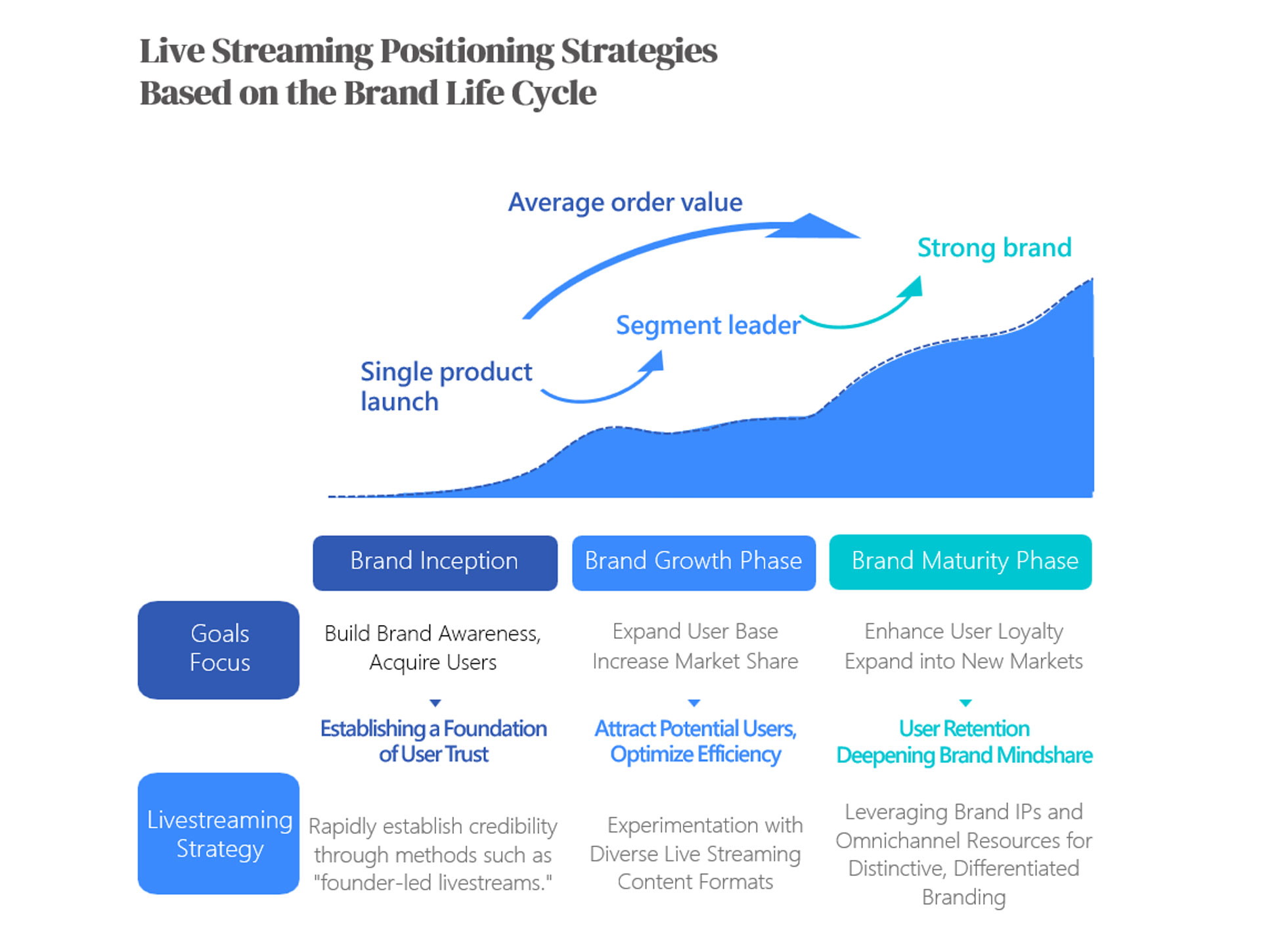
The growth maps that brands relied on in the past have become ineffective, while new species like lululemon and Babycare have seized the dividends of the demographic era, creating new consumption scenarios with previously unheard-of strategies, skipping blockbuster brands and category brands, and directly growing into super brands with massive user bases.
Brands that focus on a specific group of people, transcend a single product category, and provide comprehensive, one-stop solutions across multiple scenarios are the ones that can acquire users and become their preferred choice. A blockbuster product is merely the first step to reaching this demographic; more importantly, it's about integrating the brand into the lives of these key users through content, thereby continuously gaining their favor.
Fast-moving consumer goods (FMCG) brands with low average order value and high frequency of purchases (such as daily chemical products, fashion apparel, and food and beverages) have a low threshold for purchasing decisions, and users are more concerned with immediate gratification, so brands need to focus more on creating scenarios; while durable consumer goods brands with high average order value and low frequency of purchases (such as luxury goods, home appliances, and digital products) have a long purchasing decision cycle, and users need a lot of information to make a purchase decision, so brands need to insist on conveying value.
For brands, live streaming should be used as an important platform to implement the latest strategies at key junctures, and to be directly tested by consumers and the market.
客户留言
First Name*
Last Name*
E-mail*
WhatsApp
Line
WeChat
Country*
Website / Company Name*
What projects are you interested in? (Multiple options available)*
- E-commerce
- Social Media
- SEO
- Video Production
- Advertising
- Website Design
- Influencer Marketing
- Press Release Distribution
- Brand Identity Design
- Rebranding Solutions
- Campaign Activation
- Chinese Wikipedia Writing
- Company Registration
- Accounting & Tax Filing
- Trademark|Patent|Copyright
- Shop Design & Decoration
- Other Services
Annual Marketing Budget(USD)*
- <$10,000
- $10,000 - $50,000
- $50,000 - $300,000
- $300,000 - $1,000,000
- $1,000,000 - $5,000,000
- >$5,000,000
Please briefly describe your needs.
- I have read and agree with 《Privacy Policy》
Brandoro


;)
;)
;)