
Do GEO in China? New Marketing Methods in the AI Search Era
With the deep integration of generative artificial intelligence (AIGC) and search engines, the way users obtain information has been completely transformed, making AI search the new main battleground for digital marketing. For businesses, to capture traffic and accurately reach customers in the AI era, deploying GEO (Generative Engine Optimization) in China is an inevitable choice. As a professional agency specializing in enterprise marketing services, Brandoro also focuses on the GEO sector in China, helping companies create marketing solutions adapted to AI search.
As a new marketing approach adapted to AI search, GEO in China is reshaping enterprises' customer acquisition logic, content strategies, and brand exposure paths, helping them break free from traditional marketing bottlenecks and seize the discourse power of AI traffic.
This article will break down the core logic of GEO from a practical business perspective, compare the differences with SEO, and outline the key points of layout. Combining practical experience with Brandoro, it will help companies implement GEO marketing efficiently.
What is GEO? Its core difference from SEO
For corporate marketing teams, clarifying the differences between GEO and the familiar SEO is crucial to accurately determine the direction of GEO implementation in China and avoid blind investment. Both fall under the category of search engine optimization, but they target completely different scenarios and achieve entirely different goals.
1. Definition of GEO from a Corporate Perspective
GEO, or Generative Engine Optimization, is a content marketing optimization solution specifically designed for AI search. Simply put, it involves businesses standardizing content structure, optimizing expression logic, and aligning with AI's understanding habits to make their brand, product, and service information more easily recognized and adopted by AI search, directly integrated into the answers provided to users. This achieves precise exposure of brand information, ensuring users see the company's professional content first when seeking answers.
2. The core differences between GEO and SEO
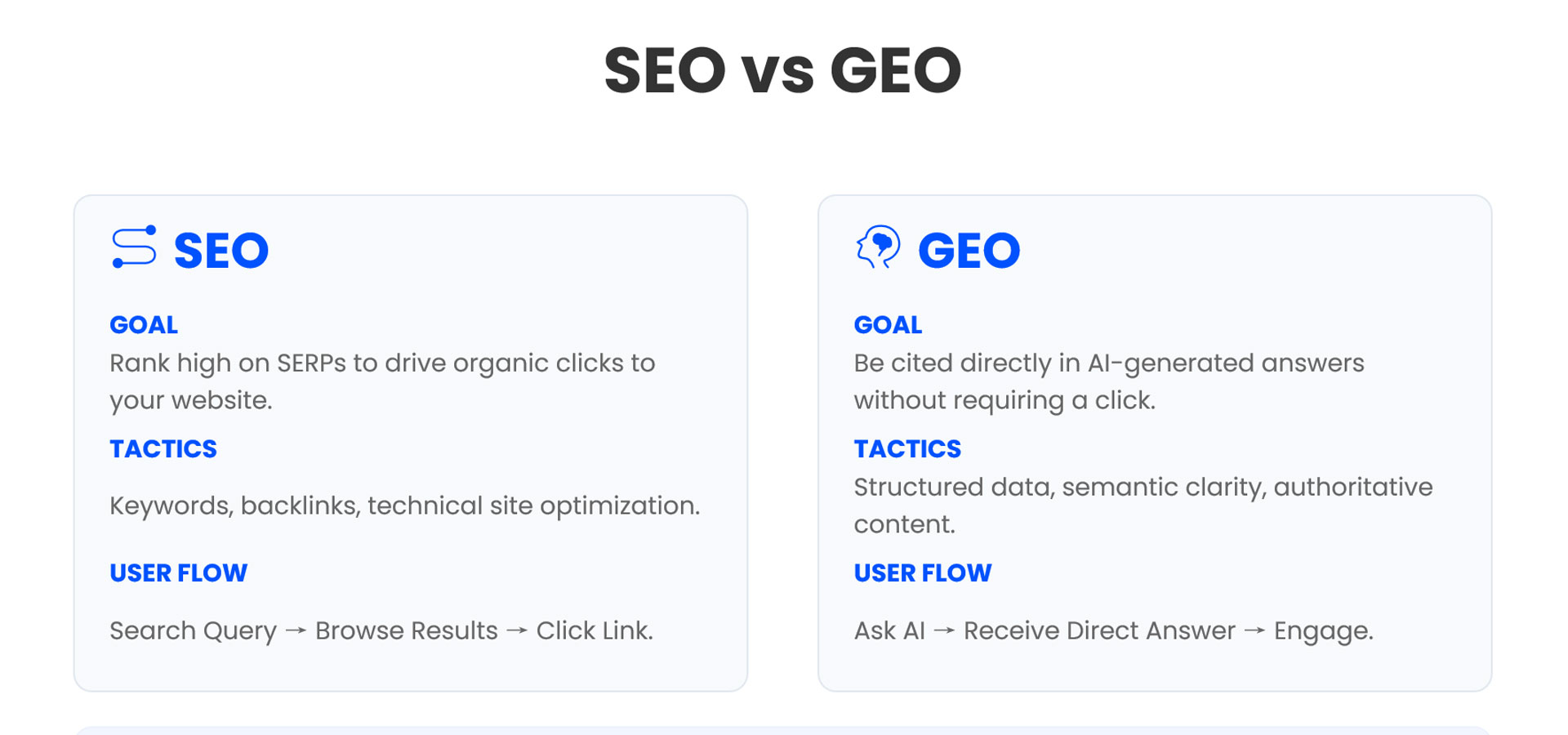
In terms of core objectives, SEO aims to make a company's webpage rank higher in search results and attract users to click on the official website; GEO aims to have the company's content directly referenced by AI, allowing the brand to appear in the AI's direct responses and gain exposure without users having to click on links.
In terms of optimization focus, SEO emphasizes technical aspects such as keyword stuffing, number of backlinks, and page loading speed; GEO emphasizes content aspects such as content structuring, accurate and clear information, relevance to user question scenarios, and association with authoritative knowledge.
In terms of user reach, SEO requires users to actively search for and click on links; GEO uses AI to proactively push enterprise information to users, resulting in higher reach efficiency.
In terms of marketing value, SEO earns webpage traffic; GEO earns user trust and brand awareness, with a shorter conversion path.
In summary, SEO is about businesses "waiting for users to find them," while GEO is about businesses "letting AI recommend products for them." This is the core reason why GEO has become a new direction for corporate marketing in China.
The core value of corporate GEO deployment in China
The increasing number of companies investing in GEO in China is not simply following a trend, but rather because it effectively addresses their marketing pain points, adapts to the domestic internet ecosystem and user habits, and brings long-term marketing benefits.
1. Adapt to new user habits and seize the AI traffic dividend.
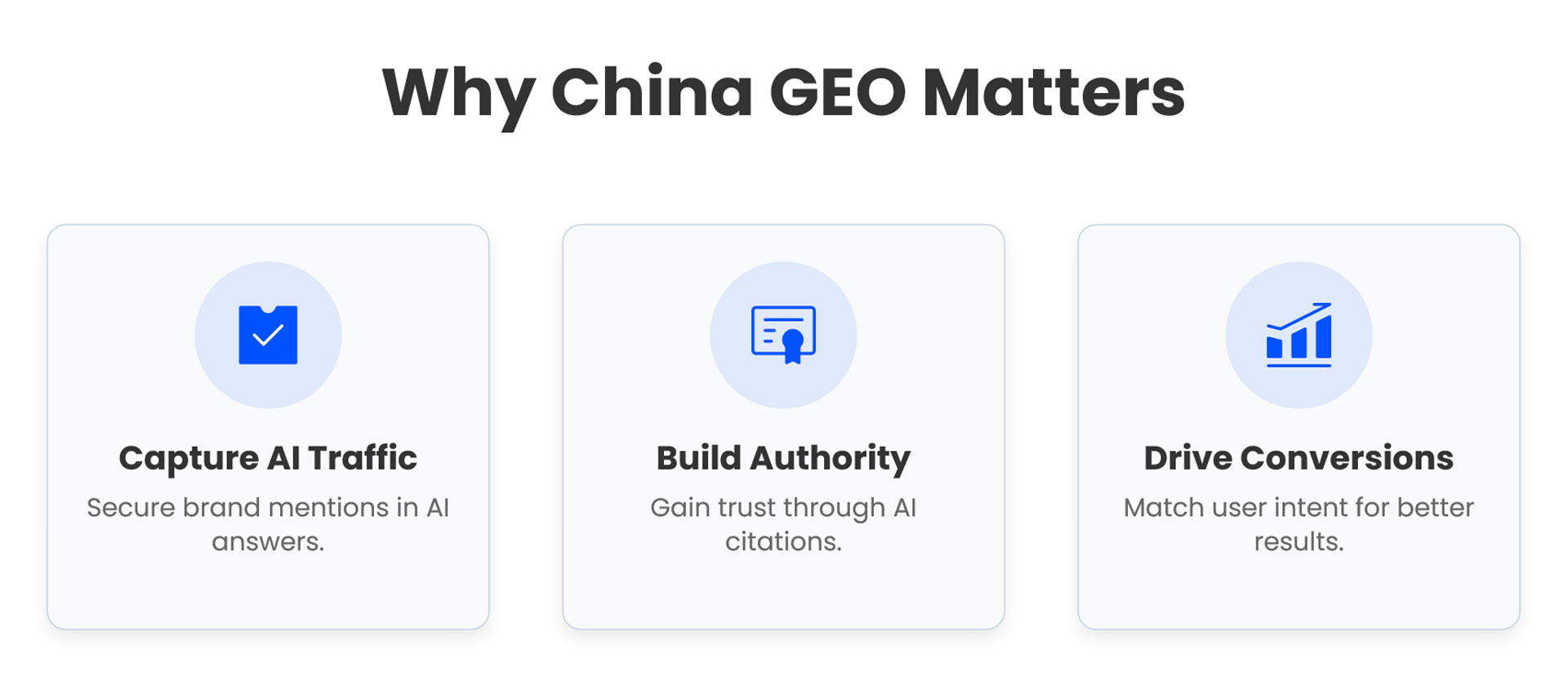
Today, users no longer rely on browsing web pages to find answers; instead, they prefer AI to provide direct solutions, leading to a continuous decline in the traffic generation effectiveness of traditional SEO. By deploying GEO (Google, Amazon China) services, businesses can accurately adapt to the operational logic of AI search, seize this new wave of traffic opportunities, and avoid missing out on customers in the AI era. Especially given that domestic users are accustomed to searching within super apps like WeChat, Douyin, Xiaohongshu, and e-commerce platforms, deploying GEO services in China enables full coverage of AI scenarios across multiple platforms, expanding brand exposure.
2. Reduce customer acquisition costs and improve conversion efficiency.
Compliant GEO optimization in China allows a company's professional information to become the core reference for AI responses. The answers users receive directly contain the company's authoritative content, eliminating intermediate lead generation steps and significantly shortening the user's decision-making path. Case studies from Brandoro's clients show that compared to traditional paid search advertising and external link placement, GEO has lower long-term customer acquisition costs and reaches more targeted users, effectively improving lead conversion rates and brand recognition.
3. Reshape marketing budgets to adapt to new ecosystem trends
Currently, over 60% of large and medium-sized enterprises in China have included GEO (Google China Operator) in their annual marketing budgets, gradually shifting their investment from inefficient SEO and traditional search marketing to GEO optimization. Implementing GEO not only optimizes search engine performance but also integrates content marketing, reputation management, and brand public relations to form a unified marketing system. This aligns with China's "platform-first" internet ecosystem, making corporate marketing strategies more forward-looking.
Practical tips for enterprises to establish GEOs in China
For businesses to create a Chinese GEO (Government Optimizer), it's not about taking shortcuts, but about returning to the essence of content and using standardized methods to enable AI to understand the company's value. Based on Brandoro's practical service experience, the following are core operational guidelines to help companies avoid detours and implement solutions efficiently.
1. Content is authentic and traceable, building a solid foundation of trust.
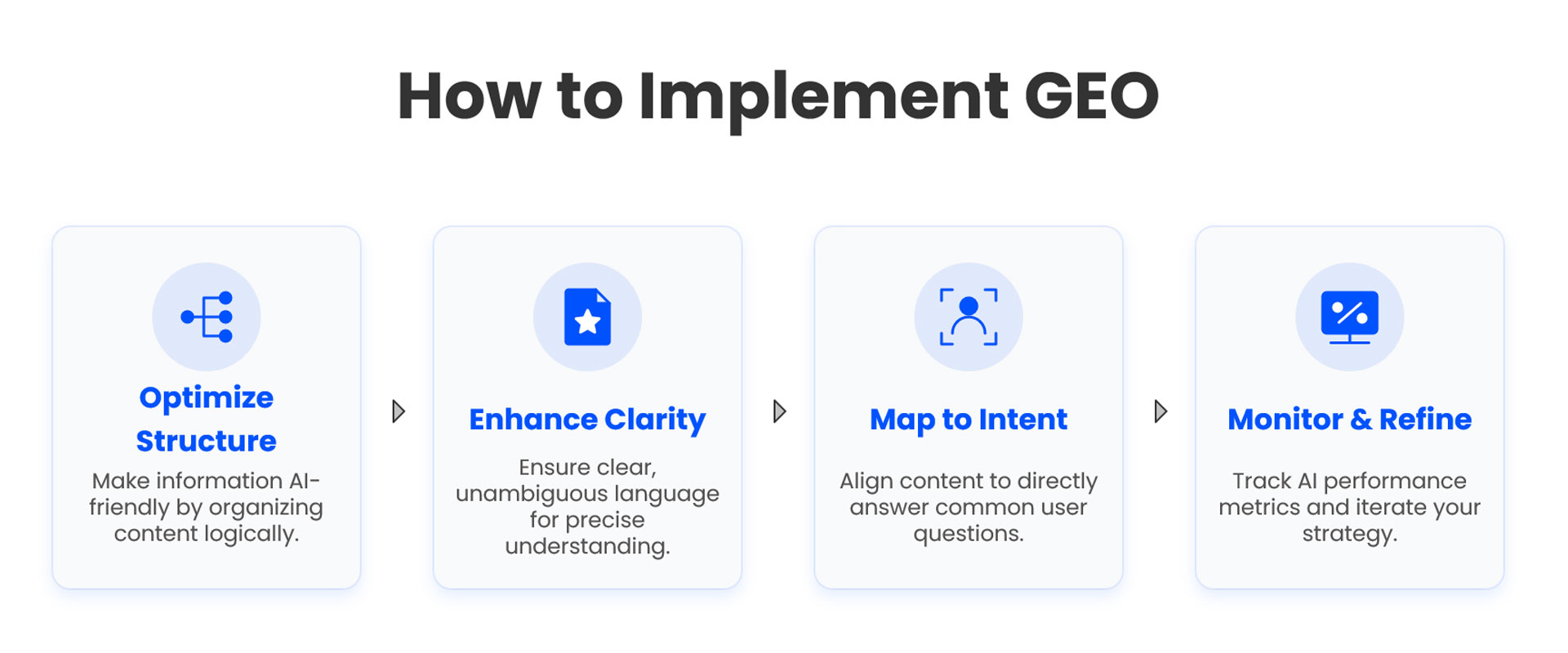
The core premise for companies to implement GEO (Generative Adversarial System) is to ensure that all content is true and reliable. Product information, service advantages, and professional data must all be based on evidence, without fabrication or exaggeration. AI prefers authoritative and authentic content. Only when information is traceable can the probability of being cited by AI be increased, while simultaneously building user trust and achieving long-term marketing effectiveness.
2. Structured expression, aligned with AI's understanding logic
When businesses create content, they should abandon cluttered expressions and adopt standardized, structured formats to present key information. For example, product parameters, service processes, professional answers, and contact information should be organized and clearly labeled in bullet points. This makes the content easy for users to understand and allows AI to quickly grasp the core points, significantly increasing the likelihood that the content will be adopted by AI.
3. Focus on user needs and tailor the approach to the questioning scenario.
When optimizing content, businesses should think from the user's perspective, covering frequently asked questions and addressing user pain points in simple, unambiguous language. For example, health service companies should address common user questions such as "symptom care and medication precautions"; e-commerce companies should match user needs such as "product functions, usage methods, and after-sales support," ensuring that content truly solves user problems rather than simply catering to algorithms.
4. Multi-platform simultaneous optimization, covering all traffic scenarios.
Given the fragmented nature of China's internet ecosystem, businesses should simultaneously promote the China GEO content standard across multiple channels, including Douyin, WeChat, Xiaohongshu, e-commerce platforms, and their own official websites, to ensure consistent and standardized information across all platforms. Regardless of which platform users use for AI search, they will see the company's professional content, achieving comprehensive brand exposure.
Compliance Bottom Line for Enterprises Becoming GEOs in China
For companies deploying GEO (Generated AI) in China, adhering to compliance principles and pursuing a positive optimization strategy is crucial for long-term development. Three core principles stand out: First, proactively label commercial promotional content, clearly distinguishing between advertising and objective information to protect users' right to know; second, avoid maliciously piling up low-quality content and engaging in unfair competition to maintain industry marketing order; and third, proactively standardize the labeling of AI-generated content to ensure transparent operations. Currently, mainstream AI platforms encourage compliant GEO optimization; adhering to these principles will not only secure platform support but also safeguard the brand's long-term reputation.
GEO in China is not a short-term marketing trend, but an essential digital marketing capability for enterprises in the AI era. For businesses, the core of implementing GEO is not taking shortcuts, but rather achieving efficient brand messaging by standardizing content and aligning with user and AI needs. Professional marketing agencies like Brandoro can provide end-to-end support for implementing GEO in China. By identifying the right practical methods and adhering to compliance principles, GEO in China can become a core tool for businesses to reduce costs, increase efficiency, capture traffic, and build brand image, enabling them to gain a foothold in the AI marketing wave.
客户留言
First Name*
Last Name*
E-mail*
WhatsApp
Line
WeChat
Country*
Website / Company Name*
What projects are you interested in? (Multiple options available)*
- E-commerce
- Social Media
- SEO
- Video Production
- Advertising
- Website Design
- Influencer Marketing
- Press Release Distribution
- Brand Identity Design
- Rebranding Solutions
- Campaign Activation
- Chinese Wikipedia Writing
- Company Registration
- Accounting & Tax Filing
- Trademark|Patent|Copyright
- Shop Design & Decoration
- Other Services
Annual Marketing Budget(USD)*
- <$10,000
- $10,000 - $50,000
- $50,000 - $300,000
- $300,000 - $1,000,000
- $1,000,000 - $5,000,000
- >$5,000,000
Please briefly describe your needs.
- I have read and agree with 《Privacy Policy》
Brandoro


;)
;)
;)